Top 10 Via Ferrata Routes Worldwide with Difficulty Ratings, Views, and Safety Tips

A steel cable fixed to a cliff can turn an impossible-looking wall into a route you will remember for life. That is the pull of via ferrata: part hike, part climb, part exposure therapy, with huge views as the reward.
The best routes are not all brutally hard. Some suit first-timers with a guide, while others demand strong arms, steady feet and a cool head for empty air beneath your boots. This guide rounds up 10 standout locations around the world, with difficulty ratings, scenery notes and practical tips to help you choose wisely.

How the difficulty ratings work
Local grading systems vary. The Alps often use letters such as A to E, while other regions use their own scales. To keep things simple, the ratings below use a five-point adventure scale.
Rating | Best for | What to expect |
1 Easy | Active beginners | Short sections, low exposure, simple movement |
2 Moderate | Fit novices or guided first-timers | More height, ladders, bridges and longer time on cable |
3 Challenging | Confident hikers and newer climbers | Sustained exposure, some steep sections, good fitness needed |
4 Hard | Experienced climbers | Long routes, arm strength, route-finding and commitment |
5 Expert | Strong, experienced climbers | Serious exposure, remote terrain, demanding weather and endurance |
Always check the current route grade before booking. Rockfall, closed sections and weather can change the character of a route fast.
1. Via delle Bocchette in the Brenta Dolomites, Italy
Difficulty rating: 4 Hard
The Brenta Dolomites feel built for this kind of adventure. Pale limestone towers rise like castle walls, with ledges cutting across faces that seem too sheer to walk. Via delle Bocchette is a classic high-mountain journey through this dramatic world, linking airy traverses, ladders, refuges and glacier-carved valleys.
The views are vast. Expect serrated peaks, drops into deep cirques and sunset light that turns the rock pink and gold. This is not a quick thrill route. It suits experienced mountain walkers who are comfortable moving for long days at altitude.
Practical tip
Plan it as a hut-to-hut trip rather than a single outing. Carry light, pack warm layers and build in spare time for weather delays.
2. Donnerkogel via ferrata in Austria
Difficulty rating: 4 Hard
Donnerkogel is famous for its “ladder to heaven”, a long sky ladder stretched between rock towers above the Salzkammergut. It has become one of Europe’s most photographed fixed-cable features, yet the route is more than one dramatic moment.
The climb mixes steep rock, open ridges and big alpine scenery. Lakes shimmer below, forests spread across the valley floor and the Dachstein peaks fill the horizon. The exposure on the ladder is serious, so this is a poor choice for anyone unsure about heights.
Practical tip
Go early if conditions allow. Popularity can lead to queues, and standing still on exposed sections is less fun than moving smoothly.
3. Mürren via ferrata in Switzerland
Difficulty rating: 2 Moderate
The route from Mürren towards Gimmelwald gives first-timers a proper taste of exposure without the commitment of a remote alpine climb. The cable follows cliffs above the Lauterbrunnen Valley, with the Eiger, Mönch and Jungfrau forming one of the most famous backdrops in the Alps.
The route includes cliff traverses, ladders and a suspension bridge. It feels thrilling rather than extreme, especially with a guide. Because it starts near a village, it is also one of the more accessible ways to try the sport in a truly spectacular setting.
Practical tip
Do not underestimate it because it is popular. Wet metal rungs, nervous traffic and valley winds can all make the route feel harder.
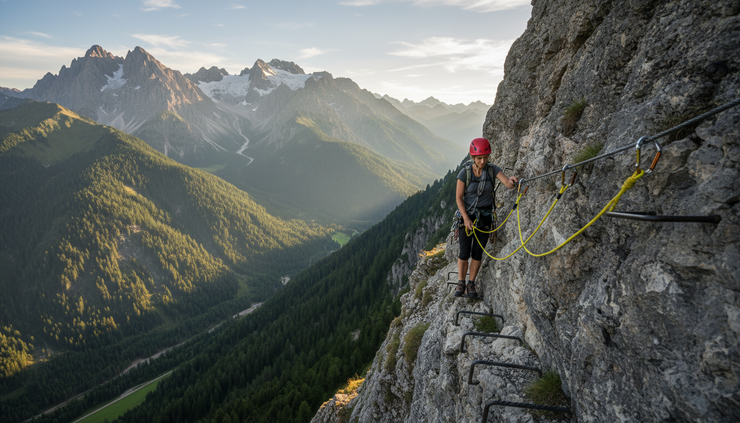
4. Telluride via ferrata in Colorado, USA
Difficulty rating: 3 Challenging
Telluride’s route is all about position. It traverses cliffs above the town, with old mining country, waterfalls and rugged Colorado peaks in view. Parts of the route feel like a mountain path, then the cable leads onto narrow rock ledges where the drop opens suddenly beneath your feet.
It is not the hardest route on this list, but the exposure feels real. The setting gives it a wild western character, with weathered rock, pine forests and high-altitude air.
Practical tip
Acclimatise before you go. Telluride sits high, and even fit visitors can feel the altitude on steep approaches and exposed traverses.
5. Low’s Peak Circuit on Mount Kinabalu, Malaysia
Difficulty rating: 4 Hard
Mount Kinabalu brings a different atmosphere. Instead of limestone Alps or desert cliffs, this route sits high on the granite slopes of Borneo’s great mountain. Low’s Peak Circuit is often described as one of the highest via ferrata experiences in the world, with huge views over Sabah when clouds part.
The route combines altitude, mountain weather and long exposure. The physical climbing is only one part of the challenge. Thin air, an early start and changing conditions all matter.
Practical tip
Treat altitude seriously. Move slowly, drink water and follow local guide instructions. If symptoms of altitude sickness appear, descending matters more than completing the route.
6. Wildwire Wanaka in New Zealand
Difficulty rating: 2 to 4 depending on route choice
Wildwire Wanaka climbs beside waterfalls near Twin Falls, with fixed cables, bridges and iron rungs rising through a steep gorge. The setting is pure South Island drama: rushing water, green slopes, open sky and mountain views.
One of its strengths is choice. Easier sections suit adventurous beginners, while higher extensions raise the exposure and effort. That makes it a strong option for mixed groups, as long as everyone chooses the right level.
Practical tip
Expect to get close to spray from the waterfalls. Wear layers that stay warm when damp and avoid cotton.
7. Honister via ferrata in the Lake District, England
Difficulty rating: 2 Moderate
Honister brings the via ferrata experience to a very different landscape. Instead of sharp alpine ridges, it follows the rugged slate mine terrain of the Lake District, with views over Borrowdale, Fleetwith Pike and the surrounding fells.
It is guided, structured and well suited to beginners who want a taste of height in the UK. The route still has exposure, especially on bridges and steeper sections, but the managed setting helps keep the experience accessible.
Practical tip
The Lake District can feel like four seasons in one afternoon. Bring waterproofs, warm layers and gloves even if the valley forecast looks mild.

8. Sacred Valley via ferrata in Peru
Difficulty rating: 3 Challenging
In Peru’s Sacred Valley, the climbing comes with a view into Inca country. Routes near the valley walls overlook fields, villages and the Urubamba River, with the Andes rising beyond. Some experiences combine the climb with zip-lines or cliffside accommodation, which adds to the sense of adventure.
The rock walls are steep, but guided routes make the experience possible for fit beginners who are comfortable with heights. The altitude adds another layer, so pacing matters.
Practical tip
Spend time in Cusco or the Sacred Valley before the climb. A gentle acclimatisation day can make the route far more enjoyable.
9. Skuleberget on the High Coast, Sweden
Difficulty rating: 1 to 4 depending on route choice
Skuleberget offers unusual scenery for this type of route. The cliff rises above Sweden’s High Coast, where forest, sea and islands meet. Instead of alpine glaciers, the reward is a wide Nordic view over water and woodland.
The site has several routes, from easier options to steeper, harder lines. That range makes it one of the best places for progression. A beginner can start small, while a stronger climber can seek a more demanding climb on the same mountain.
Practical tip
Choose your route honestly. If the easier grade feels exciting enough, enjoy it. Moving with confidence is safer than pushing into fear too early.
10. Todra Gorge in Morocco
Difficulty rating: 2 to 3 Moderate to Challenging
Todra Gorge is a striking place to clip into a cable. Sheer orange limestone walls rise above a narrow canyon, with palms, villages and desert-edge mountains nearby. The light changes throughout the day, shifting from warm gold to deep shadow as the sun moves across the gorge.
The route gives a rare North African flavour to a sport often linked with Europe. It is a strong choice for travellers who want climbing, culture and dramatic canyon scenery in one trip.
Practical tip
Heat can be a bigger issue than cold. Start early, carry water and check that any hired equipment is in good condition before leaving the ground.
Essential preparation before any route
A great day on cables starts before you reach the first rung. Fitness helps, but judgement matters more.
Before committing, check:
The latest route status
Look for closures, rockfall warnings, seasonal restrictions and access rules.
The weather forecast
Avoid thunderstorms. Metal cables, exposed ridges and lightning are a dangerous mix.
Your real comfort with heights
Exposure can feel different once there is open air below your boots.
Descent options
Many accidents happen when people are tired after the main climb.
Local guiding requirements
Some routes strongly recommend or require a guide, especially for first-timers.
If you are new, book a qualified local guide. A good guide does more than lead the way. They teach clipping technique, manage pace and help prevent small mistakes from becoming serious.
Gear recommendations for safer climbing
A proper Via ferrata kit is not the same as a normal climbing sling setup. Use equipment designed for this activity and make sure it meets current safety standards.
Bring:
Helmet
Rockfall and dropped gear are common hazards on busy routes.
Harness
A comfortable sit harness works for most routes. Adjust it over the clothes you will actually wear.
Energy-absorbing lanyard set
This is the key piece. It reduces impact forces in a fall.
Climbing gloves
They protect your hands from rough cable and help grip in cold or wet conditions.
Approach shoes or mountain boots
Choose sticky soles with enough stiffness for metal rungs and rocky paths.
Small rucksack
Pack water, snacks, layers, head torch, first aid basics and a phone in a waterproof pouch.
Weather layers
Mountain conditions change fast. A lightweight waterproof and warm mid-layer belong in the pack.
Do not use homemade lanyards. Do not clip both lanyard arms off the cable at the same time. Move one carabiner at a time so you stay attached.

Quick safety habits that make a big difference
Good habits keep the day calm.
Keep space between climbers, especially on vertical sections. Only one person should load a cable span between anchor points when possible. Watch for loose stones and shout a clear warning if anything falls. Clip carefully at anchors, then check that carabiners close fully.
Pace yourself. Pumped forearms lead to sloppy clipping, and rushing increases mistakes. On exposed sections, breathe slowly and focus on the next move rather than the full drop below.
Turn back if the route, weather or group energy feels wrong. The mountain will still be there another day.
The best route to choose first
For beginners, Mürren, Honister, Skuleberget’s easier routes or Wildwire Wanaka’s lower options make excellent starting points. They offer real exposure with good access and a clear sense of progression.
For experienced climbers, Via delle Bocchette, Donnerkogel and Low’s Peak Circuit deliver bigger commitment, stronger scenery and the kind of airy movement that makes fixed-cable climbing so addictive.
The right route is the one that matches your fitness, weather window and head for heights. Start well within your ability, learn the systems properly, and build from there. Once the first cable clicks shut and the valley drops away, the world starts to look wonderfully bigger.
Visit our store and get your Adrenal Kit going for your next great adventure!!!!
Test our MVP app and get involved in the worlds first community based platform for extreme and adventure sports!!
Comments